
How Do I Plan Football Sessions for a Mixed-Ability Youth Team With Little Time?
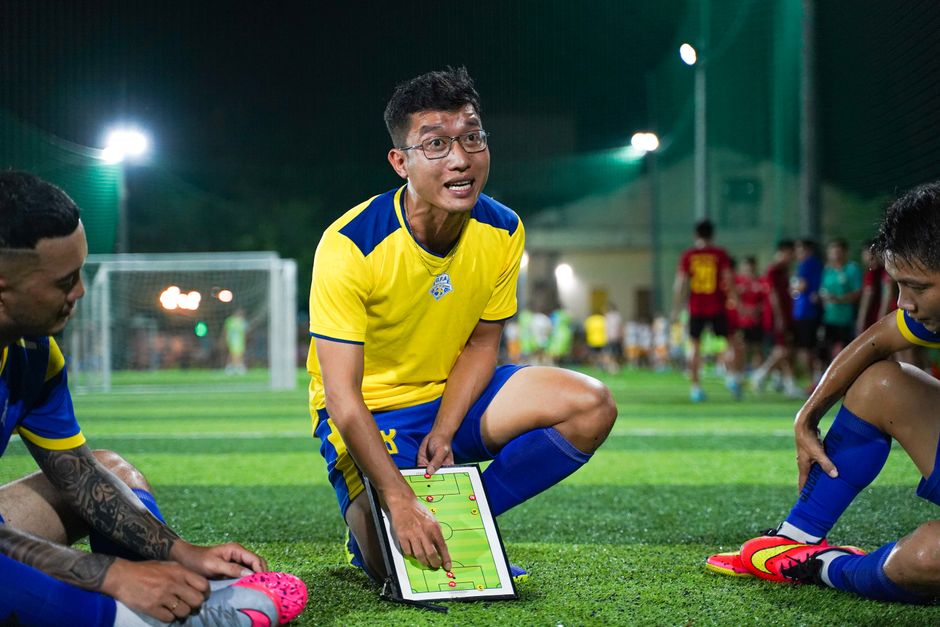
Plan around one clear outcome, then use a simple sequence: start with a game, practise the skill in a focused activity, and finish with another game. Keep the activity adaptable by changing space, task, equipment or player numbers. This gives a mixed-ability group a shared session while letting each player face a suitable level of challenge.
How do I plan a football training session when I have little time?
Choose one outcome first, then build the session around it. If the aim is to help players keep the ball under pressure, make that the thread running through the opening game, focused practice and closing game.
The Football Association’s England Football Learning describes a whole-part-whole structure: begin with a team game, work on a technique or skill in smaller groups, then return to a team game. The opening game shows what is happening; the middle gives players focused repetition; the final game puts the practice back into a team setting. The FA calls for sessions to be realistic, relevant to the players’ age group and rich in repetition.
A short plan can fit on one note:
- Outcome: name one action or decision to observe.
- Opening game: use a familiar game that brings out that action.
- Focused practice: keep the same theme and make the challenge easier or harder.
- Closing game: return to play and watch for the chosen action.
This is a structure, not a demand for extra equipment or several new drills. A coach can reuse the same practice and change one condition. That keeps preparation light and makes it easier to see whether the adjustment helped.
For another option, the FA outlines a carousel of three or four related stations followed by a match, or an “up the steps” progression from individual technique to small-group games and a team game. When time or space is tight, a single focused practice between two games is easier to manage.
How can one drill work for players with different ability levels?
Keep the core problem the same and change the level of challenge around it. Players can work on the same theme while facing different amounts of space, opposition or support.
The FA’s England Football Learning recommends defining the intended outcome before designing a practice and using that outcome as the coach’s observation focus. It identifies unopposed, unopposed with interference, overloaded and matched-up practices. Opposition-based formats ask players to make decisions; the coach can choose the format that suits the goal and the group.
For example, in a passing-and-support practice, one group can begin without defenders, another can add a passive obstacle, and another can play a directional game with opponents. These are variations, not rankings. A player who needs time to find the pass gets room to practise; a player ready for more pressure has a defender and a decision to solve.
The FA calls this approach parallel practices: groups work on variations of the same practice with different levels of challenge. Use STEP to make a change without replacing the whole session:
- Space: widen or narrow the area.
- Task: simplify the goal or add a decision.
- Equipment: use a larger target or clearer boundary.
- Players: add support, reduce numbers or create an overload.
Change one element at a time. Give players time to practise before altering the task again. That makes it easier to spot whether the adjustment changed the play in the way you wanted.
What should a youth football training session include?
A useful youth session includes a clear goal, plenty of practice, and opportunities to make decisions in game-like situations. Small-sided games can help combine those elements, but the research supports specific conclusions rather than every possible claim about development.
A systematic review and meta-analysis in Frontiers in Psychology examined small-sided game interventions with players under 18. Across six eligible controlled studies, it found a small statistically significant effect on technical execution compared with control groups. The review did not find included studies reporting tactical-behaviour outcomes, so it called for further study of those outcomes. Small-sided games offer a practical way to practise technique; that review does not establish that they improve every tactical skill.
A separate systematic review in the International Journal of Environmental Research and Public Health included 47 studies from team sports. It reports that reducing player numbers and pitch size generally increases ball contacts per player and the frequency of technical actions in the reviewed research. The review also notes that age and ability affect practice demands. A smaller game can mean more involvement, but the area and rules still need to fit the players.
Use direction and a scoring target when the goal involves moving play towards an end. The FA recommends directional practices with opposition and scoring, and adapting formats to matchday conditions such as 5v5 or 7v7. For a park session, existing pitch lines can mark the area; cones can define an end zone or target. The FA’s Boot Room notes that a football and some cones can be enough to run an activity.
Keep the closing game connected to the session outcome. If the focus was finding a passing option, watch for players looking up and supporting the ball carrier. You do not need to stop every few minutes to correct each action. Observe first, then offer a short cue or alter the conditions when the practice no longer serves its purpose.
Frequently Asked Questions
How do I keep children engaged without stopping play to explain everything?
Set up the activity before players arrive and explain the goal in a few short instructions. Demonstrate one key action, start play, then use brief pauses to highlight one observation or adjust the challenge. Give players enough time to practise before changing the task.
What can I do if I have few cones or a small training area?
Use existing pitch lines as boundaries and reserve cones for end zones or targets. Reduce the playing area and player numbers to keep the activity moving, or set up a simple 2v1. The FA notes that a football and some cones can be enough to run an activity.
A session does not need a new drill at every turn. One clear outcome, one adaptable practice and a return to play can give a mixed-ability team a useful shape.
Sources
- The Football Association — How to structure a training session
- The Football Association — How to design football practices
- The Football Association — How to build a session on challenging
- Frontiers in Psychology — Systematic review and meta-analysis of small-sided games
- International Journal of Environmental Research and Public Health — Systematic review of small-sided games
Keep reading

Can I Transfer or Resell FIFA World Cup Tickets, and What Fees Apply?
How FIFA ticket transfer differs from resale, the 15% marketplace fee, eligibility limits, seller payments, and ways to troubleshoot common problems.
Choose a Spain Football Camp That Fits Your Child
Compare camp formats, training, supervision, and travel requirements to find a Spain football program that fits your child.